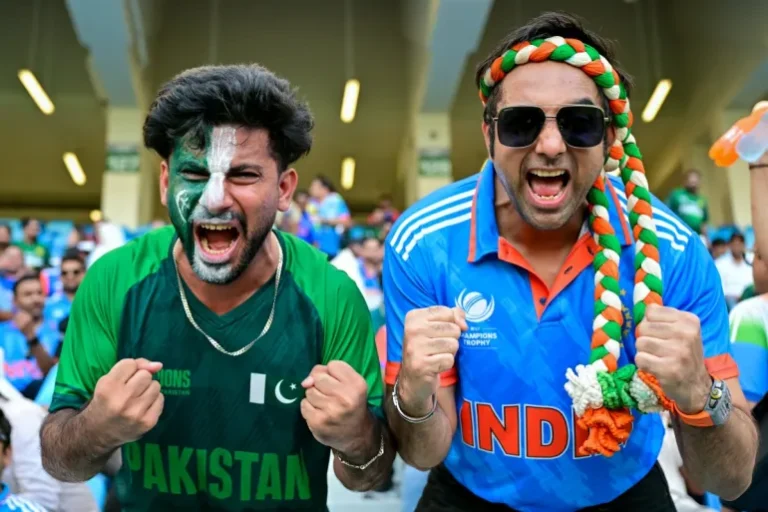
Pakistan’s threat to boycott their T20 World Cup match against India should have rung alarm bells across the ICC and its member nations.
Not that Pakistan has any power in world Cricket. Their demands were all but rejected and face-saving concessions were made to Bangladesh. But, as strong as the ICC was during this ‘crisis’ if they, and other cricket playing nations, didn’t see the red flag, they may be in for a rude shock in the future.
ICC tournament groups have been pre-fixed for years. India and Pakistan are always put in the same group to ensure at least one India-Pakistan match.
Is that fair? Probably not. Is that how international sports tournament draws should be made? Definitely not. But as I have always said, everything in life comes down to economics, and the economics of this match are strong. So, it is what is.
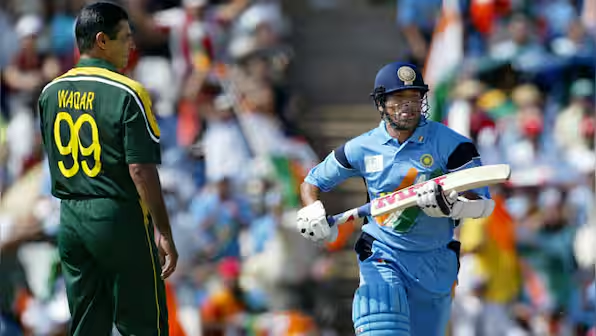
The Sydney Morning Herald quoted sources that said an India – Pakistan match has an estimated value of about $250 million. This includes broadcasting, tickets, impact of fan travel to the venue and several other factors.
Flight tickets from Mumbai to Colombo were so expensive that a friend is driving from Mumbai to Pune to fly to Colombo.
The What If Scenario– Cricket’s Nightmare
Herein lies the risk.
The ball really is in India’s court. We control world cricket and as we witnessed a Pakistan threat to boycott can be managed with a fly swatter.
In the current scenario India and Pakistan do not play bilateral series but play each other in ICC tournaments. I still can’t understand that distinction, but let’s leave that for now.
What if the dynamics change? What if the tensions between the two countries accelerate to the point where India refuses to play Pakistan even in ICC events. What then?
The impact on the ICC and its member nations revenue, broadcasters’ advertising income and other entities that benefit from the $250 million will be significant.
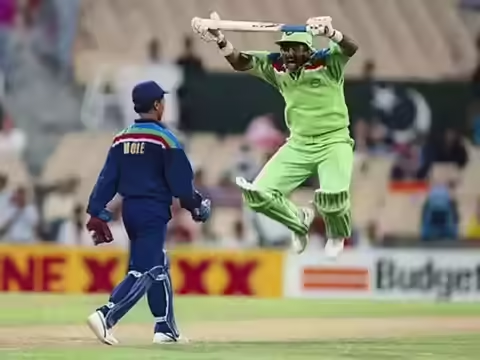
Just to give you a sense of the size of the market, the PCB’s annual revenue from the ICC is approximately a mere $38 million. That is how microscopically tiny Cricket is from a financial perspective.
The ‘what if’ scenario of India refusing to play Pakistan in ICC events is not far-fetched. As recently as last year the two nations were on the brink of war.
What should the ICC Focus on to circumvent the impact?
The reality is that an India – Pakistan will always be highly valued, that is not going to change. What can change is the percentage of its impact on the overall numbers.
The only way to do that is to grow the game.
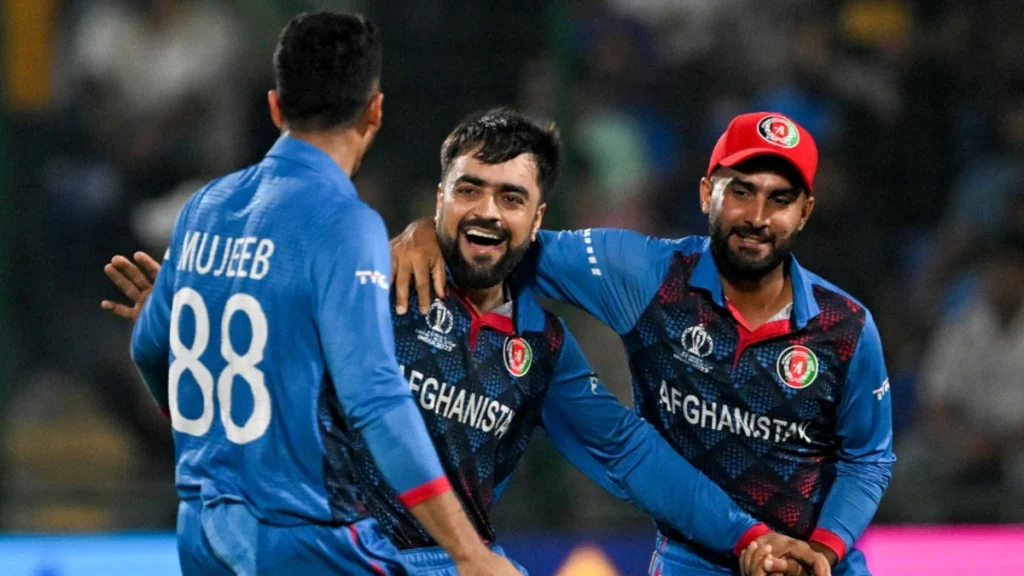
The T20 World Cup has shown some remarkable performances by ‘minnow teams’.
USA and Nepal have shown that they are improving in T20. Afghanistan lost a thriller to South Africa. In the ODI World Cup they beat England and barring a miracle innings from Glenn Maxwell would have beaten Australia.
- The goal of the ICC should be to develop cricket first and foremost in the developing cricket playing nations.
- ICC funds must be allocated to ensure this development. If the rest of the nation’s earn a little less than it’s worth it to ensure growth.
- 5-8 countries need to be identified and targeted for aggressive, fast paced development.
- A special ICC task force must be set up with well-defined goals and timelines. Including setting up a strong domestic system at all levels (school to professional), coaching, visiting tours from top tier countries etc.
The format for development must only be T20 cricket. First Class cricket and ODI cricket must not be focused on at all in these countries. The T20 format offers many advantages over the other two formats.
- The games are 3-4 hours long and action packed allowing for a TV audience in a non-playing cricket nation to develop local interest
- Easier to create globally competitive teams in T20 rather than Tests and ODI.
- With T20 leagues in so many countries, players from the developing nations can get opportunities to play in leagues like the IPL, Big Bash, CPL, SAT20 and more. This will further develop the game in the country by creating sporting heroes.
- Easier to attract youth interest in T20 vs Tests and ODI
The success of the program would be based on how these countries perform in bi-lateral series against traditional cricket nations as well as in ICC tournaments. The goal should be that within the next 10-12 years a minnow team must make to the semi-finals or finals of a major T20 tournament. It is possible.
An India-Pakistan encounter will never be matched in terms of interest, viewership and finances. However, if we can cut its percentage of the pie, then the next time Pakistan threatens, it won’t be as financially devastating.
Till then, enjoy Sunday’s match
Photo Credit: Links in pictures to source